Key Takeaways
FSMA 204 raises the bar for food traceability, requiring manufacturers to capture and maintain critical data at key points throughout production and distribution. While the regulation is often viewed as a software challenge, this article shows how accurate traceability ultimately depends on packaging, labeling, and material handling systems on the plant floor.
- FSMA 204 requires Key Data Elements (KDEs) to be captured at Critical Tracking Events (CTEs) to help identify and contain foodborne illness outbreaks faster.
- Traceability breaks down when codes are unreadable, labels are damaged, or product flow prevents accurate scanning.
- Automation—through reliable coding, labeling, and controlled material handling—plays a critical role in maintaining data integrity at production speed.
Some food manufacturers will face additional scrutiny under new FDA regulations to identify and contain foodborne illness outbreaks faster. While this regulation is often discussed in terms of data and software, compliance ultimately depends on what happens on the plant floor.
That’s where packaging, labeling, and material handling processes determine whether this traceability information exists. Learn what the new regulations require and how you can accurately capture data at production speed.
FSMA 204 Explained
What It Is
The Food Safety Modernization Act Section 204 (FSMA 204) mandates enhanced recordkeeping for companies that manufacture, process, and pack foods at high risk of contamination.
These high-risk foods must have Key Data Elements (KDEs) recorded at Critical Tracking Events (CTEs).
CTEs
These track any time food is handled or changes hands during the growing, receiving, transforming, packaging, and shipping process.
KDEs
These must be recorded at each CTE and include the following:
- Traceability lot codes linking the product to its origin and processing history
- Product descriptions
- Quantity and unit of measure
- Location identifier
- CTE date
- Who performed the CTE
What It Does
If there’s an outbreak, having improved traceability means contaminated foods can be removed from the shelves much more quickly, ideally within 24 hours.
What Foods It Affects
Foods that can be contaminated early, have little or no “kill steps”, support pathogen growth and/or are handled extensively before people eat them.
This includes:
- Some fresh produce: herbs, leafy greens, melons, peppers, spouts, tomatoes, tropical tree fruits
- Some seafood: fish with fins, crustaceans, mollusks
- Some dairy: soft and non-pasteurized cheese
- Nut butters
- Eggs in the shell
- Ready-to-eat deli salads: potato salad, egg salad, seafood salad
What Foods It Doesn’t Affect
- Meat, poultry and egg products regulated by the USDA
- Foods that undergo a required “kill step” before consumption, such as pasteurization or cooking
- Certain forms of foods on the list, such as dried or frozen
When It Goes Into Effect
The original compliance date of Jan. 20, 2026, has been extended to July 20, 2028.
Understanding KDEs and CTEs in a Plant Setting
Complying with FSMA 204 doesn’t just involve software. It extends to your coding, labeling and material handling processes on the plant floor. That’s because CTEs often occur at:
- Packaging lines
- Case packing
- Palletizing
- Shipping lanes
If coding is:
- Smudged due to poor application
- Unreadable due to labels tearing during conveying or wrapping
- Missed in scans due to lines moving too fast
Then you have a problem because the KDE doesn’t exist. This is where coding, labeling, and material handling systems play a critical role in consistent application and readability.
Where KDEs and CTEs Happen and How Automation Supports Accurate Traceability
This table shows where FSMA 204 requirements happen on the plant floor—and how automation supports accurate traceability.
| Critical Tracking Event (CTE) | Where It Happens on the Floor | Key Data Elements (KDEs) Captured | How Automation Supports Traceability |
|---|---|---|---|
| Receiving | Inbound dock, depalletizing, staging | Traceability lot code Supplier name & location Product description Quantity received Date received |
Case & pallet label readability Controlled material flow for scanning Proper staging to prevent lot mixing |
| Creating (Initial Packing) | Primary packaging line | Traceability lot code Product description Quantity packed Packing date Packing location |
CIJ coding on primary packages Code placement & durability Line speed matched to print quality |
| Transforming | Repack, mixing, relabeling, or processing areas | New traceability lot code Input lot codes (parent lots) Transformation description Date & location Quantity created |
Reliable CIJ recoding Print & apply case labeling Conveying designed to preserve lot integrity |
| Shipping | Palletizing, stretch wrapping, outbound dock | Traceability lot code Customer name & location Quantity shipped Ship date Ship-from location |
Case & pallet print-and-apply labeling Pallet integrity during handling Consistent pallet patterns for scan accuracy |
How Our Solutions Close the Traceability Gap
Traceability only works when coding is applied accurately, remains readable, and stays connected to products as they move throughout your operation.
RMH Systems specializes in turnkey solutions for the food industry, closing the gap with customized coding, labeling and material handling systems that meet the real-world demands of food production environments.
Here are just a few of the ways our engineering experts can assist you in becoming FSMA 204-compliant.
High-Speed CIJ Systems Built for Food Environments
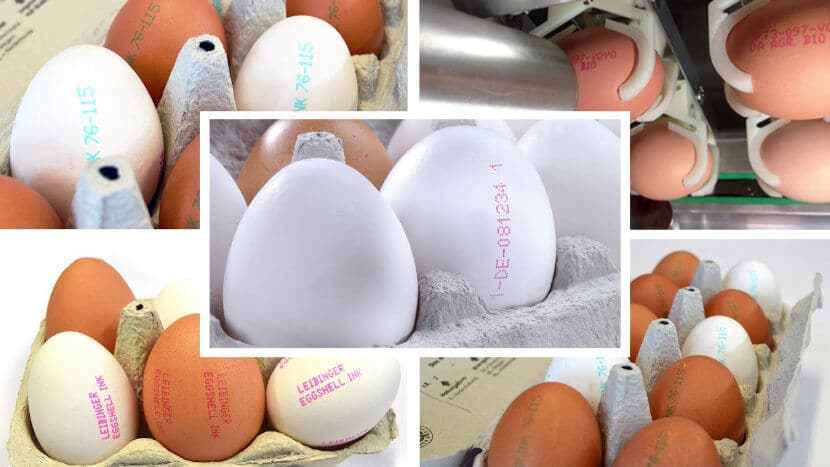
Traceability begins when coding is applied to packaging or directly to the product. Continuous inkjet printers apply coding contact-free and provide a high level of reliability and consistency. They work in tandem with print verification systems, which ensure every print is perfect.
Labeling Solutions Ensuring Accurate Data Collection
Traceability next depends on accurate aggregation at the case and pallet level. RMH supports this process with product labeling solutions such as print-and-apply labelers that print directly to cases and pallet labelers that label full pallets. This ensures data can be captured, scanned and verified during receiving, storage and shipping.
Material Handling Systems Designed for Traceability
High-speed food production environments can undermine traceability if material flow is not controlled. RMH specializes in helping food companies maintain data integrity without sacrificing operational efficiency through conveyors and palletizing robots, to name just a few solutions.
Take the Next Step Toward FSMA 204 Readiness
Effective traceability depends on how products are coded, labeled, and moved through a facility. While there is still time until FSMA 204 regulations go into effect, now is the time to review how prepared your packaging and material handling processes are. RMH offers free consultations to assess your readiness and identify practical next steps, so request yours today!
Talk to an Engineer
Have questions about your application or project? Our engineers are here to help—no pressure, just practical answers.
Related Articles

When Cattle Inventory Is Tight and Labor Is Tighter: How to Gain a Competitive Edge with Automation
Key Takeaways Beef processors are facing mounting pressure from tight cattle supplies and persistent labor shortages. For small to mid-sized operations, automation doesn’t have to mean replacing workers or investing in massive new systems. [...]

Choosing the Right Automation Partner: 4 Questions Every Regional Beef Processor Should Ask
Key Takeaways Automation can give regional beef processors a real competitive edge—but only when it’s right-sized and backed by the right partner. This blog outlines the key questions regional processors should ask when evaluating [...]
Automation ROI for Regional Beef Processors: Where to Start and What to Expect
Key Takeaways Beef processors are under increasing pressure from labor shortages, rising wages, and higher expectations for quality and sustainability. As a result, automation is being reevaluated—not as a simple cost-reduction tool, but as [...]