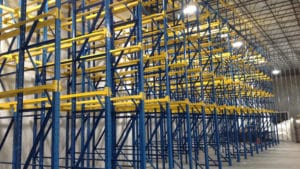
 Pallet racking systems are built to endure the daily rigors of loading and unloading, but over time, they can suffer damage from various sources—forklift impacts, excessive loading, or even seismic activity. Recognizing when to repair or replace damaged components is crucial for maintaining structural integrity and safety in your warehouse.
Understanding Damage: What Does It Mean?
The Rack Manufacturers Institute (RMI) states that “damaged racks should be repaired or replaced,” yet it provides limited specifics on what constitutes damage. Generally, it refers to deviations from established industry standards concerning uprights, beams, and bracing.
Steel King, a leading pallet rack manufacturer, offers guidelines for assessing damage. Some instances of damage, like a severely compromised upright post, are immediately evident. Arlin Keck, P.E., emphasizes the importance of taking swift action: “Unload adjacent bays and tape off the area until repairs or replacements are made. A damaged frame’s only support might be the upright behind it.”
 Fostering a Culture of Safety
Encourage your warehouse team to report any suspected damage. Management should create an environment that welcomes feedback about potential issues. Even seemingly minor dents or bends in structural components should be documented and reviewed.
Key Structural Issues to Monitor
- Aisle Post Damage: Due to high traffic, aisle posts are particularly susceptible to damage. Utilizing post guards can help mitigate this risk.
- Beam Connector Disengagement: This typically occurs in systems with pinned connections. Ensure that safety clips are replaced promptly to maintain connection integrity.
Consider the Type of Steel
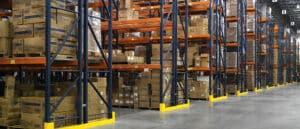
The type of steel used in your racking system—cold-formed versus structural—affects its resilience. For example, cold-formed posts are more vulnerable to dents than structural posts, which can better absorb impacts due to their design.
Situations Requiring Immediate Attention
Certain circumstances warrant urgent action regarding damaged racking:
- Facilities in high-risk seismic zones (categories D, E, and F).
- Racks supporting heavy or hazardous materials.
- Systems operating near their rated capacity.
Legal Considerations
While minor damage may not compromise safety, it’s essential to act cautiously, especially in today’s litigious environment. Prioritizing safety ensures a secure environment for employees, products, and your racking system.
Regular inspections and a proactive approach to maintenance can help safeguard your warehouse’s operational efficiency and safety. Remember, when in doubt, consult a qualified inspector to assess any damage you encounter! The rack and storage professionals at RMH Systems has you covered – reach out with questions!
Talk to an Engineer
Have questions about your application or project? Our engineers are here to help—no pressure, just practical answers.
Related Articles
RMH Systems and Systems in Motion Partner to Create National End-to-End Material Handling, Automation Platform
WAUKEE, Iowa – July 21, 2026 — RMH Systems, a leading provider of automation, material handling, packaging, robotics, and industrial scale solutions, is excited to announce its partnership with Systems in Motion, a [...]

RMH Systems Acquires Top Shelf Integrated Solutions, Expanding Material Handling Capabilities in Ohio
WAUKEE, IA – July 6, 2026 — RMH Systems (RMH), a leading provider of turnkey automation, material handling, packaging, and industrial scale solutions, has acquired Top Shelf Integrated Solutions (Top Shelf), a respected [...]

Buyer’s Guide: What To Consider in Warehouse Racking Systems
Does your warehouse need a new storage system to improve your workflow? Learn what to consider in warehouse racking systems with our buyer's guide.